

Interactive Effect of Age on Overall and Relative Survival Benefits of Radiotherapy for Early-Stage Diffuse Large B-Cell Lymphoma in the Rituximab Era
DOI:
https://doi.org/10.14740/jh2134Keywords:
DLBCL, Radiotherapy, Relative survival, AgeAbstract
Background: The aim of the study was to determine the interactive effect of age on overall survival (OS) and relative survival (RS) benefits of radiotherapy (RT) in early-stage diffuse large B-cell lymphoma (DLBCL).
Methods: Data for 10,841 adults with early-stage DLBCL from the Surveillance, Epidemiology, and End Results database between 2002 and 2015 were retrospectively analyzed. Primary therapy was classified as combined-modality treatment (CMT; n = 3,631) and chemotherapy alone (n = 7,210). Inverse probability of treatment weighting was used to balance covariate distribution between the treatment groups. Survival was estimated and compared using the Kaplan-Meier method and log-rank test, respectively. Age-RT interactive effect on survival was examined through Cox regression multiplicative interaction analysis.
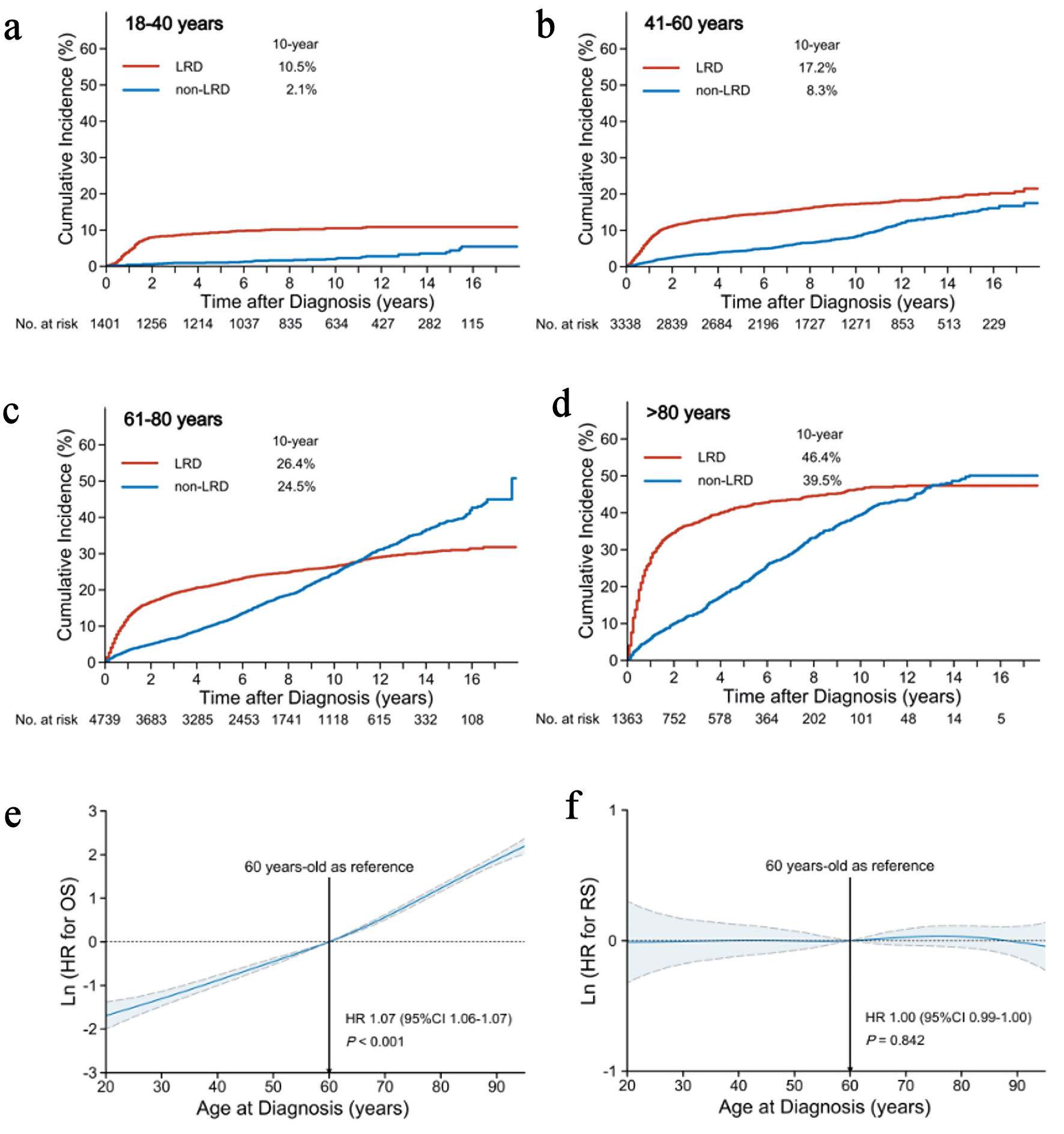
Results: Using age of 60 years as the reference, older age was an independent predictor of shorter OS in the multivariable Cox model (hazard ratio (HR), 1.07; 95% confidence interval (CI), 1.06–1.07; P < 0.001). After controlling for background mortality, older age was not an independent predictor of RS (HR, 1.00; 95% CI, 0.99–1.00; P = 0.842). Across all age groups, patients treated with CMT had better OS and RS than those who received chemotherapy alone. A significant interaction between age and RT was identified for both OS (Pinteraction = 0.020) and RS (Pinteraction = 0.038), indicating greater RT benefit in young patients. A linear correlation existed between RS and OS at the treatment arm level.
Conclusions: RT was associated with improved net survival across all ages, particularly for young adults. RS was a valid alternative endpoint for prognostication and benefit evaluation.
Published
Issue
Section
License
Copyright (c) 2026 The authors

This work is licensed under a Creative Commons Attribution 4.0 International License.