

Management Patterns and Outcomes for Relapsed or Refractory Hodgkin Lymphoma
DOI:
https://doi.org/10.14740/jh2218Keywords:
Hodgkin lymphoma, Relapsed/refractory, Brentuximab vedotin, Immune checkpoint inhibitor, Safety-net, Stem cell transplant, Salvage therapy, Real-worldAbstract
Background: Relapsed and refractory classical Hodgkin lymphoma (r/r cHL) remains a therapeutic challenge, particularly in underserved populations with limited access to novel agents. Data on management patterns and outcomes in safety-net health systems are sparse.
Methods: We conducted a retrospective review of patients with r/r cHL treated at a Los Angeles County safety-net hospital between 2014 and 2024. Treatment regimens, response rates, and toxicities were analyzed.
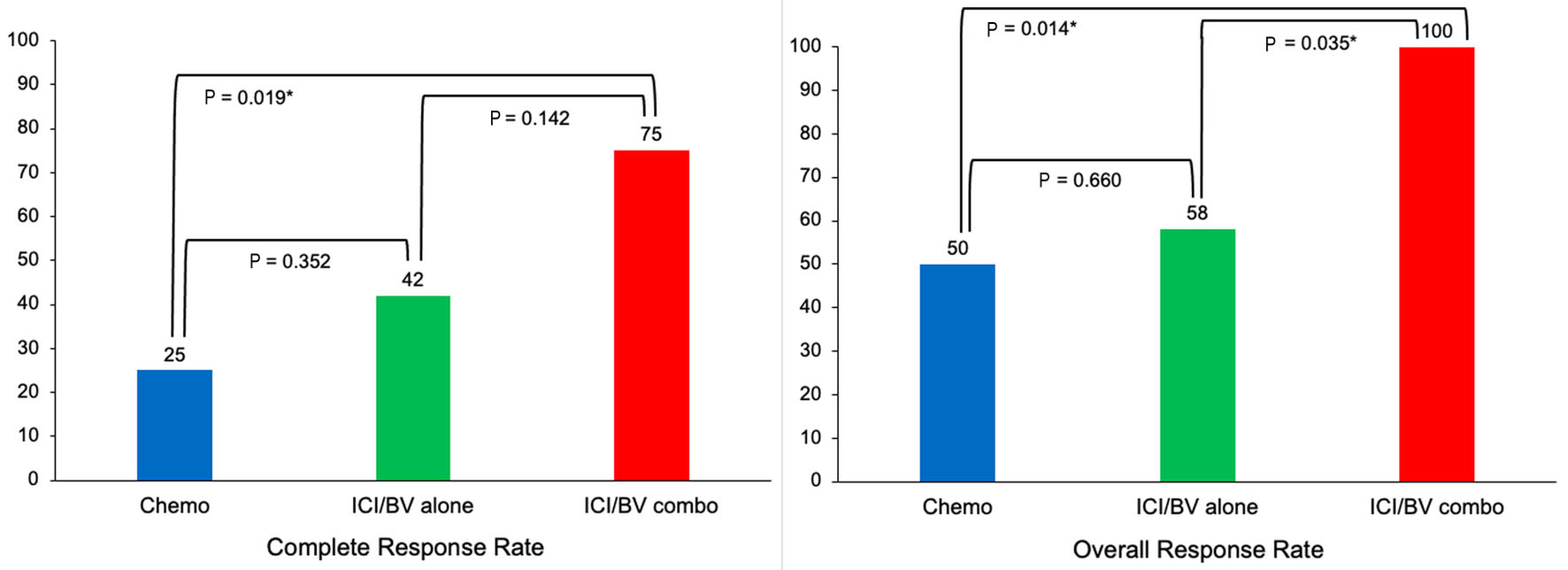
Results: Twenty-one patients with r/r cHL were included. Doxorubicin + bleomycin + vinblastine + dacarbazine was the predominant first-line regimen (85.7%). In the relapsed/refractory setting, outcomes differed by treatment class. Cytotoxic chemotherapy yielded an overall response rate (ORR) of 50% and complete response rate (CRR) of 25%. In comparison, immune checkpoint inhibitor (ICI) or brentuximab vedotin (BV) monotherapy demonstrated an ORR of 58% and CRR of 42%, while ICI/BV combination regimens achieved the highest observed response rates (ORR 100%, CRR 75%). One-year progression-free survival (PFS) was 38% with cytotoxic chemotherapy, 39% with ICI or BV monotherapy, and 63% with combination regimens. Median follow-up was 38 months, and overall survival (OS) for the entire cohort was 95% at 1 year and 85% at 5 years.
Conclusions: In this real-world safety-net cohort, ICI- and BV-based regimens, particularly in combination, were associated with higher response rates compared with cytotoxic chemotherapy. These findings are consistent with prior studies and support the evolving role of targeted and immunotherapy-based approaches in r/r cHL, while highlighting the importance of access to novel therapies in underserved populations.
Published
Issue
Section
License
Copyright (c) 2026 The authors

This work is licensed under a Creative Commons Attribution 4.0 International License.