

Measles Pneumonia After Allogeneic Hematopoietic Stem Cell Transplantation
DOI:
https://doi.org/10.14740/jh2234Keywords:
Measles, Graft-versus-host disease, Pneumonia, Hematopoietic stem cell transplantationAbstract
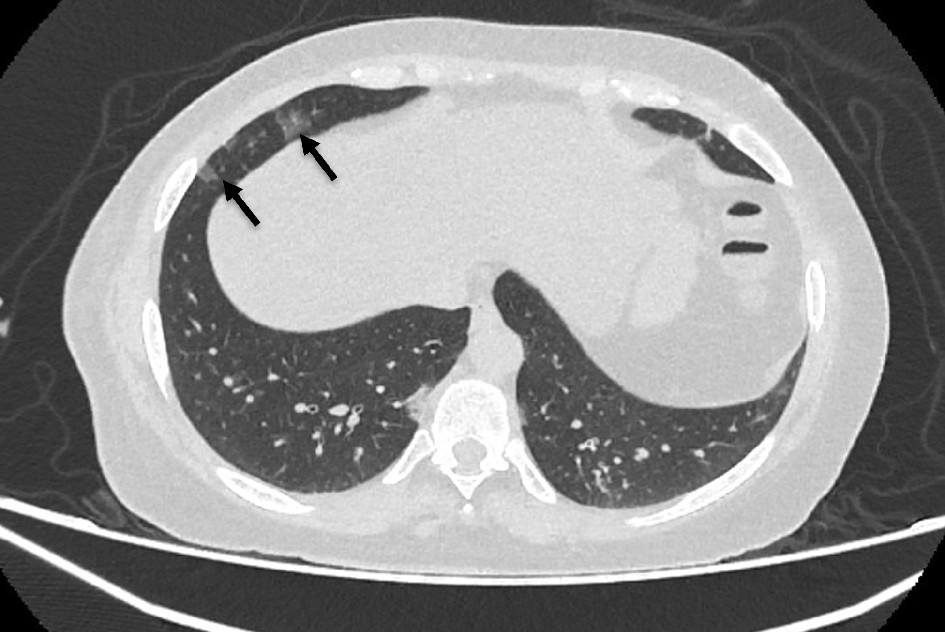
Measles is a highly contagious viral infection that is rarely reported after allogeneic hematopoietic stem cell transplantation (HSCT), with only a limited number of cases described in the literature. We report the case of a 46-year-old woman who developed laboratory-confirmed measles complicated by atypical pneumonia 3 years after human leukocyte antigen (HLA)-identical sibling allogeneic HSCT for acute lymphoblastic leukemia. Her post-transplant course had been complicated by steroid-refractory chronic graft-versus-host disease (GVHD), successfully treated with ruxolitinib, which had been discontinued only a few months before presentation. She was admitted with fever, severe odynophagia, and diffuse oral mucosal erythema, leading to an initial diagnosis of chronic GVHD flare and treatment with corticosteroids and empirical antimicrobials. During hospitalization, she rapidly developed hypoxemic respiratory failure and a characteristic cephalocaudal maculopapular rash. Reverse transcription polymerase chain reaction (RT-PCR) of a throat swab confirmed measles virus infection. Corticosteroids were discontinued, and the patient received supportive care and intravenous immunoglobulin (IVIG), with complete clinical and radiologic recovery. Notably, despite adequate quantitative immune reconstitution, including preserved CD4+ and CD8+ T-cell counts and normal immunoglobulin levels, she remained susceptible to measles because she was not yet eligible for measles-mumps-rubella (MMR) vaccination according to current post-transplant recommendations. This case highlights the diagnostic challenge of distinguishing measles from chronic GVHD in transplant recipients, emphasizes that quantitative immune recovery does not necessarily reflect pathogen-specific immunity, and underscores the importance of maintaining a high index of suspicion and performing early molecular testing during community outbreaks.
Published
Issue
Section
License
Copyright (c) 2026 The authors

This work is licensed under a Creative Commons Attribution 4.0 International License.