| Journal of Hematology, ISSN 1927-1212 print, 1927-1220 online, Open Access |
| Article copyright, the authors; Journal compilation copyright, J Hematol and Elmer Press Inc |
| Journal website https://jh.elmerpub.com |
Review
Volume 15, Number 5, October 2026, pages 219-224

Heterogeneity in Infection Reporting Across Covalent Bruton Tyrosine Kinase Inhibitor Studies in B-Cell Malignancies: A Systematic Review
Musa Kiyania, d  , Owen Clanahanb, Michael A. Silvermanc
aDepartment of Internal Medicine, University of Miami/HCA Florida JFK Hospital, Atlantis, FL 33462, USA
bKansas City University College of Osteopathic Medicine, Kansas City, MO 64106, USA
cSchmidt College of Medicine, Florida Atlantic University, Boca Raton, FL 33431, USA
dCorresponding Author: Musa Kiyani, Department of Internal Medicine, University of Miami/HCA Florida JFK Hospital, Atlantis, FL 33462, USA
Manuscript submitted July 27, 2026, accepted October 9, 2026, published online October 31, 2026
Short title: BTKi and Infections
doi: https://doi.org/10.14740/jh2233
| Abstract | ▴Top |
Bruton tyrosine kinase inhibitors (BTKis) have transformed the management of B-cell malignancies but are associated with clinically important infectious complications. Interpretation and comparison of infectious risk across studies remain challenging because reporting practices vary considerably. We systematically reviewed 40 clinical trials and cohort studies including 5,486 BTKi-treated patients published between 2013 and 2025 to characterize infectious outcome reporting. Upper respiratory tract infections, pneumonia, and urinary tract infections were the most frequently reported, while opportunistic fungal and viral infections were reported inconsistently. Only 11 studies described antimicrobial prophylaxis, and substantial variability was observed in infection severity grading, follow-up duration, adverse-event reporting, and attribution of infection-related mortality. These inconsistencies limit meaningful comparisons of infectious risk across BTKi studies and may confound interpretation of apparent differences between agents. Standardized reporting of infectious outcomes and prophylactic strategies is needed to improve future clinical trials and facilitate evidence-based infection prevention in patients receiving BTKi therapy.
Keywords: Infections; CLL; Bruton’s kinase inhibitors
| Introduction | ▴Top |
Bruton tyrosine kinase inhibitors (BTKis) have transformed the treatment of B-cell malignancies, including chronic lymphocytic leukemia (CLL), mantle cell lymphoma (MCL), and Waldenstrom macroglobulinemia [1–4]. Despite their favorable efficacy and tolerability, BTK inhibition also affects innate and adaptive immune signaling, increasing susceptibility to bacterial, viral, and opportunistic infections [5, 6]. Infectious complications therefore remain an important cause of morbidity and mortality throughout the course of BTKi therapy.
Although infectious adverse events are routinely reported in BTKi clinical trials and observational studies, considerable variability exists in how these outcomes are defined, graded, and summarized. Studies differ in the reporting of all-grade versus grade ≥ 3 infections, follow-up duration, infection-related mortality, microbiological characterization, and antimicrobial prophylaxis, limiting meaningful comparisons of infectious risk across studies and between individual BTKi agents. Consequently, apparent differences in infection burden may reflect differences in reporting practices as much as true biological variation.
We therefore systematically reviewed published clinical studies of BTKis in patients with B-cell malignancies to characterize current reporting of infectious outcomes and identify methodological limitations that may influence interpretation of infection-related safety data.
| Materials and Methods | ▴Top |
A systematic literature search of PubMed and Embase was performed to identify English-language clinical studies published between January 2013 and July 2025 evaluating covalent BTKi therapy in patients with B-cell malignancies. Study selection followed the Preferred Reporting Items for Systematic Reviews and Meta-Analyses (PRISMA) principles (Fig. 1). Eligible studies included prospective clinical trials and observational cohort studies reporting infectious outcomes in patients receiving ibrutinib, acalabrutinib, zanubrutinib, orelabrutinib, or tirabrutinib. The noncovalent BTKi pirtobrutinib was outside the scope of this review. Reviews, case reports, conference abstracts, duplicate publications, pharmacokinetic-only studies, non-human studies, studies not involving hematologic malignancies, non-primary analyses, and studies without extractable infectious outcome data were excluded.
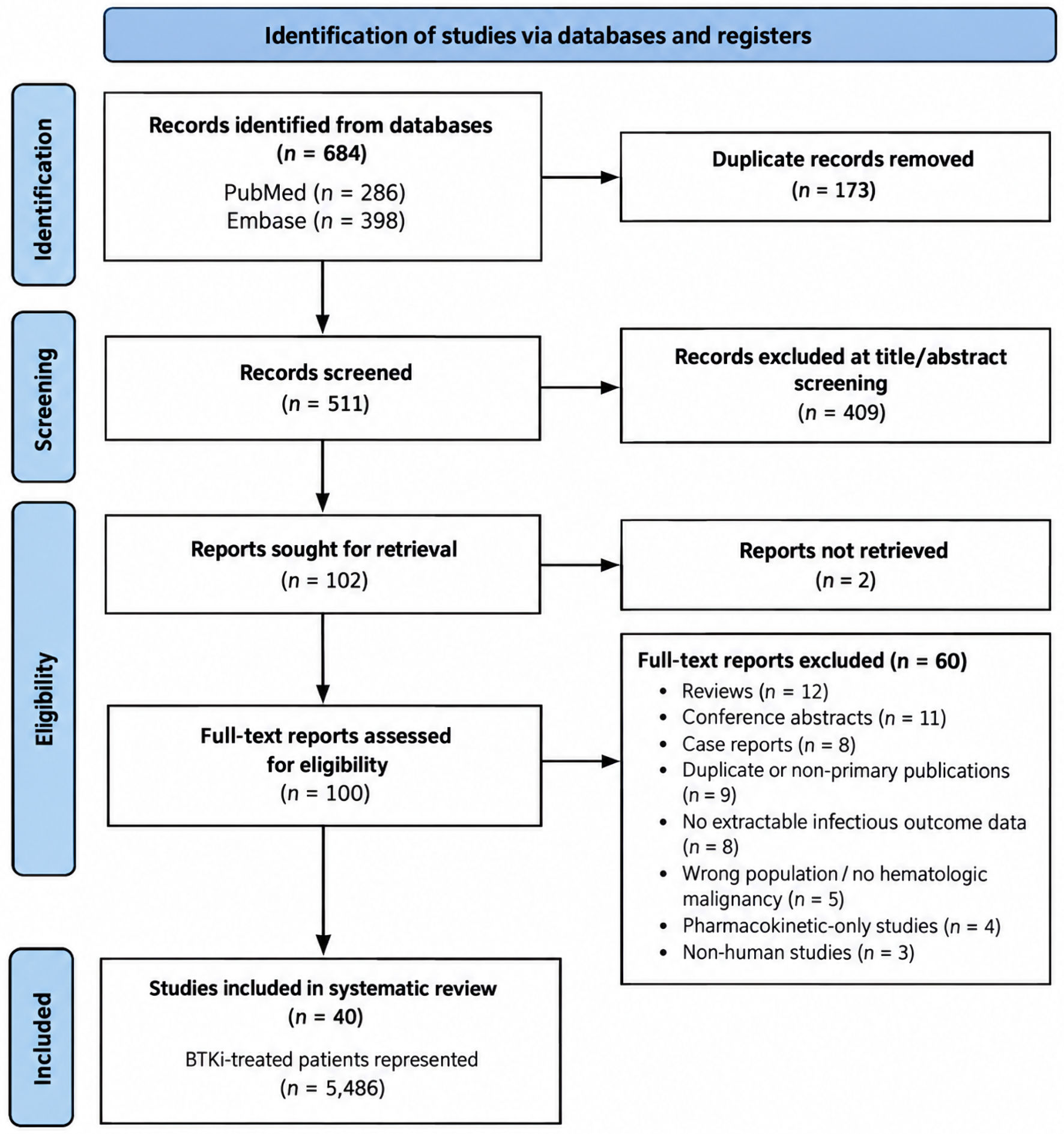 Click for large image | Figure 1. PRISMA flow diagram of study selection. Flow diagram showing identification, screening, eligibility assessment, and inclusion of studies evaluating infectious outcomes among patients with B-cell malignancies receiving covalent Bruton tyrosine kinase inhibitors (BTKis). PRISMA: Preferred Reporting Items for Systematic Reviews and Meta-Analyses. |
Two investigators (MK and OC) independently screened eligible studies and extracted study characteristics, including study design, disease subtype, treatment setting, BTKi agent, concomitant anticancer therapy, follow-up duration, antimicrobial prophylaxis, and reported infectious outcomes. We also recorded additional therapy given with the study regimen and reported immunosuppression contributors, such as neutropenia. The extraction did not systematically capture the timing of prior anti-CD20 exposure, corticosteroid use, prior chemotherapy, transplant history, or other prior immunosuppressive exposures. Infectious events were extracted as reported by the original investigators and categorized as all-grade or grade ≥ 3 events where available. Infection-related mortality was recorded only when explicitly attributed to infection by the study investigators.
Given the substantial heterogeneity amongst studies, pooled patient-level meta-analysis was not considered appropriate. Study characteristics and infectious outcomes were therefore summarized descriptively. Continuous variables were presented as mean with standard deviation or median with interquartile range, as appropriate, and categorical variables as frequencies and percentages. Reporting frequencies were compared between phase I and phase III studies using two-sided Fisher’s exact tests because of small cell counts. These comparisons evaluated study-level reporting practices rather than patient-level infection risk; they do not measure the completeness of safety data collection or isolate an effect of the trial phase. Statistical significance was defined as a two-sided P < 0.05. Analyses were performed using IBM SPSS Statistics for Windows, Version 32.0 (IBM Corp., Armonk, NY, USA).
| Results | ▴Top |
Study characteristics
A total of 40 studies comprising 5,486 patients treated with BTKis for B-cell malignancies were included. Studies without extractable infectious outcome data were excluded. Among studies reporting sex (n = 4,777), 69.0% were male and 31.0% female. The median reported age across 37 studies was 66 years (range 55–80). Twenty-one (52.5%) were phase I studies, 14 (35.0%) were phase III studies, and five (12.5%) were phase II or observational studies. CLL was the most frequently studied malignancy (25 studies, 62.5%), followed by MCL (10 studies, 25.0%), with the remainder including Waldenstrom macroglobulinemia and other B-cell malignancies. Ibrutinib was the most commonly evaluated BTKi, although acalabrutinib, zanubrutinib, orelabrutinib, and tirabrutinib were also represented. Concomitant anticancer therapy was administered in 11 studies (27.5%), most commonly anti-CD20 monoclonal antibodies, whereas BTKi monotherapy was evaluated in 29 studies (72.5%). Antimicrobial prophylaxis was reported in only 11 studies (27.5%). Study characteristics are summarized in Table 1.
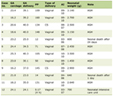 Click to view | Table 1. Characteristics of Included BTKi Studies |
Infectious outcome reporting
Reporting of infectious outcomes varied considerably across studies. All-grade infections were reported in 29 studies (72.5%), whereas grade ≥ 3 infections were reported in 27 studies (67.5%). Pneumonia was the most frequently reported serious infection, followed by coronavirus disease 2019 (COVID-19), aspergillosis, and sepsis. Overall, 150 deaths explicitly attributed to infection by the study investigators were reported among 5,486 patients (2.73%), although attribution methods differed substantially between studies. Detailed infectious outcomes are summarized in Table 2.
Click to view | Table 2. Reported Infectious Complications Across BTKi Studies, Stratified by Study Phase |
Heterogeneity in reporting practices
Marked heterogeneity was observed in the reporting of infectious adverse events. Studies differed in infection definitions, severity grading, reporting thresholds, and duration of follow-up. Many publications reported only selected infectious adverse events meeting prespecified frequency criteria, while others restricted reporting to grade ≥ 3 events or serious adverse events. Microbiological characterization, antimicrobial prophylaxis, infection-related mortality, and timing of infectious complications were inconsistently reported. The frequency with which specific infection outcomes appeared in the included publications differed numerically by study phase. The absence of an outcome from a publication does not establish that the trial did not collect it or that no such events occurred. Grade ≥ 3 infections were reported in 17 of 21 phase I studies (81.0%) compared with seven of 14 phase III studies (50.0%; odds ratio (OR), 4.25; P = 0.073). Aspergillosis was reported in seven phase I studies (33.3%) compared with one phase III study (7.1%; OR, 6.50; P = 0.108). Neither difference reached statistical significance. No significant phase-based differences were observed in the reporting of pneumonia, upper respiratory tract infection, urinary tract infection, skin or soft-tissue infection, cryptococcosis, viral reactivation, infection-related mortality, or antimicrobial prophylaxis (all P > 0.05). These unadjusted comparisons should be interpreted cautiously because phase I and phase III studies differ in patient populations, follow-up, safety monitoring, adverse-event table thresholds, and publication objectives.
| Discussion | ▴Top |
BTKis have transformed the management of CLL and other B-cell malignancies, providing durable disease control and improved tolerability compared with conventional chemoimmunotherapy [1, 2]. Their expanding use across treatment settings has been accompanied by increasing recognition of infectious complications resulting from both disease-associated immune dysfunction and the immunomodulatory effects of BTK inhibition [3–5]. In this systematic review of 40 studies involving 5,486 patients, we identified substantial heterogeneity in the reporting of infectious outcomes, limiting meaningful comparisons across studies and between individual BTKi agents. The included studies enrolled patients with different B-cell malignancies, including CLL, MCL, and other diseases. Differences in baseline immune dysfunction, prior treatment, concomitant therapy, and follow-up may affect observed infectious outcomes. Accordingly, differences between studies or BTKi agents cannot be attributed to the inhibitor without accounting for underlying malignancy and these other factors.
Although differences in reported infection rates likely reflect variation in patient populations and disease characteristics, methodological differences in adverse-event reporting likely contribute substantially [6–16]. Studies varied considerably in infection-related outcomes. Consequently, reported infection frequencies should be interpreted as study-level reporting patterns rather than precise estimates of patient-level risk. These inconsistencies hinder cross-trial comparisons and complicate interpretation of infectious safety profiles of BTKis. Importantly, only 11 studies (27.5%) described antimicrobial prophylaxis, despite its potential influence on observed infectious outcomes. Variation in antibacterial, antiviral, or antifungal treatments may substantially modify infection rates independent of BTKi therapy itself.
The Consolidated Standards of Reporting Trials (CONSORT) Harms guidance provides a foundation for reporting how adverse outcomes are defined, assessed, graded, and counted within each treatment group [17]. For BTKi studies, those measures would be more informative if publications also described the infection site and organism when known, timing relative to treatment, antimicrobial prophylaxis, underlying malignancy, and relevant immunosuppressive exposures. We recommend presenting these details alongside infection counts and infection-related deaths. This would give readers the clinical context needed to interpret differences across studies without assuming that variation in published reporting reflects variation in infection risk. Table 3 summarizes our recommendations for future reporting in BTKi trials.
Click to view | Table 3. Recommended Reporting of Infectious Outcomes in Future BTKi Trials |
The infectious complications reported in BTKi studies should also be interpreted within the broader therapeutic landscape. Chemoimmunotherapy regimens, especially venetoclax-based therapies, remain associated with substantial rates of serious infections [8, 9]. Opportunistic infections such as invasive aspergillosis and viral reactivation syndromes, although infrequently reported, remain of particular clinical concern because of their associated morbidity and mortality in immunocompromised patients receiving BTKi therapy [18, 19]. COVID-19 also emerged as a frequently reported serious infection in contemporary studies, illustrating how changing infectious epidemiology across publication eras further complicates comparisons between BTKi trials. Rather than suggesting superiority or inferiority of one treatment approach over another, these observations underscore the importance of standardized infection reporting.
This study has several limitations. The analysis relied on study-level data extracted from published English-language studies and was therefore dependent on the completeness and quality of reporting within the original publications. Substantial heterogeneity amongst studies precluded quantitative synthesis or direct comparisons between individual BTKi agents. Combination regimens, particularly those incorporating anti-CD20 monoclonal antibodies, may independently influence infectious risk and therefore further limit comparisons across studies. Although we recorded concomitant therapy and reported immunosuppression contributors, we did not systematically capture prior anti-CD20 exposure, corticosteroid use, prior chemotherapy, transplant history, or other immunosuppressive exposures. We therefore could not account for their potential effects on infectious outcomes. Most included studies evaluated ibrutinib, limiting generalizability to newer-generation BTKis. Nevertheless, this review provides a comprehensive assessment of infectious outcome reporting across contemporary BTKi studies and highlights opportunities to improve consistency in future clinical trials. Future BTKi clinical trials should incorporate standardized reporting of infectious outcomes to improve the interpretation and comparability of infectious safety data.
Acknowledgments
None to declare.
Financial Disclosure
This research was supported (in whole or in part) by HCA Healthcare and/or an HCA Healthcare affiliated entity. The views expressed in this publication represent those of the authors and do not necessarily represent the official views of HCA Healthcare or any of its affiliated entities.
Conflict of Interest
None of the authors has any financial interests, relationships or affiliations relevant to the subject of this manuscript.
Author Contributions
Musa Kiyani: writing, review, editing, and statistical analysis. Owen Clanahan: writing, review, and editing. Michael A. Silverman: writing, review, and editing. All authors had access to all data.
Data Availability
All data analyzed in this study are derived from previously published studies. The extracted datasets are available from the corresponding author upon reasonable request.
| References | ▴Top |
- Byrd JC, Furman RR, Coutre SE, Flinn IW, Burger JA, Blum KA, Grant B, et al. Targeting BTK with ibrutinib in relapsed chronic lymphocytic leukemia. N Engl J Med. 2013;369(1):32-42.
doi pubmed - Brown JR, Eichhorst B, Hillmen P, Jurczak W, Kazmierczak M, Lamanna N, O'Brien SM, et al. Zanubrutinib or ibrutinib in relapsed or refractory chronic lymphocytic leukemia. N Engl J Med. 2023;388(4):319-332.
doi pubmed - McDonald C, Xanthopoulos C, Kostareli E. The role of Bruton's tyrosine kinase in the immune system and disease. Immunology. 2021;164(4):722-736.
doi pubmed - Robak E, Robak T. Bruton's kinase inhibitors for the treatment of immunological diseases: current status and perspectives. J Clin Med. 2022;11(10):2807.
doi pubmed - Lipsky A, Lamanna N. Managing toxicities of Bruton tyrosine kinase inhibitors. Hematology Am Soc Hematol Educ Program. 2020;2020(1):336-345.
doi pubmed - Brown JR, Eichhorst B, Lamanna N, O'Brien SM, Tam CS, Qiu L, Jurczak W, et al. Sustained benefit of zanubrutinib vs ibrutinib in patients with R/R CLL/SLL: final comparative analysis of ALPINE. Blood. 2024;144(26):2706-2717.
doi pubmed - Tam CS, Opat S, D'Sa S, Jurczak W, Lee HP, Cull G, Owen RG, et al. A randomized phase 3 trial of zanubrutinib vs ibrutinib in symptomatic Waldenstrom macroglobulinemia: the ASPEN study. Blood. 2020;136(18):2038-2050.
doi pubmed - Eichhorst B, Robak T, Montserrat E, Ghia P, Hillmen P, Hallek M, Buske C, et al. Chronic lymphocytic leukaemia: ESMO Clinical Practice Guidelines for diagnosis, treatment and follow-up. Ann Oncol. 2015;26(Suppl 5):v78-84.
doi pubmed - Fischer K, Al-Sawaf O, Bahlo J, Fink AM, Tandon M, Dixon M, Robrecht S, et al. Venetoclax and Obinutuzumab in Patients with CLL and Coexisting Conditions. N Engl J Med. 2019;380(23):2225-2236.
doi pubmed - Tam CS, Brown JR, Kahl BS, Ghia P, Giannopoulos K, Jurczak W, Simkovic M, et al. Zanubrutinib versus bendamustine and rituximab in untreated chronic lymphocytic leukaemia and small lymphocytic lymphoma (SEQUOIA): a randomised, controlled, phase 3 trial. Lancet Oncol. 2022;23(8):1031-1043.
doi pubmed - Xu W, Yang S, Zhou K, Pan L, Li Z, Zhou J, Gao S, et al. Treatment of relapsed/refractory chronic lymphocytic leukemia/small lymphocytic lymphoma with the BTK inhibitor zanubrutinib: phase 2, single-arm, multicenter study. J Hematol Oncol. 2020;13(1):48.
doi pubmed - Song Y, Zhou K, Zou D, Zhou J, Hu J, Yang H, Zhang H, et al. Zanubrutinib in relapsed/refractory mantle cell lymphoma: long-term efficacy and safety results from a phase 2 study. Blood. 2022;139(21):3148-3158.
doi pubmed - Cull G, Burger JA, Opat S, Gottlieb D, Verner E, Trotman J, Marlton P, et al. Zanubrutinib for treatment-naive and relapsed/refractory chronic lymphocytic leukaemia: long-term follow-up of the phase I/II AU-003 study. Br J Haematol. 2022;196(5):1209-1218.
doi pubmed - Tam CS, Opat S, Simpson D, Cull G, Munoz J, Phillips TJ, Kim WS, et al. Zanubrutinib for the treatment of relapsed or refractory mantle cell lymphoma. Blood Adv. 2021;5(12):2577-2585.
doi pubmed - Al-Sawaf O, Ligtvoet R, Robrecht S, Stumpf J, Fink AM, Tausch E, Schneider C, et al. Tislelizumab plus zanubrutinib for Richter transformation: the phase 2 RT1 trial. Nat Med. 2024;30(1):240-248.
doi pubmed - Tam CS, Quach H, Nicol A, Badoux X, Rose H, Prince HM, Leahy MF, et al. Zanubrutinib (BGB-3111) plus obinutuzumab in patients with chronic lymphocytic leukemia and follicular lymphoma. Blood Adv. 2020;4(19):4802-4811.
doi pubmed - Hopewell S, Chan AW, Collins GS, Hrobjartsson A, Moher D, Schulz KF, Tunn R, et al. CONSORT 2025 statement: updated guideline for reporting randomised trials. BMJ. 2025;389:e081123.
doi pubmed - Ghez D, Calleja A, Protin C, Baron M, Ledoux MP, Damaj G, Dupont M, et al. Early-onset invasive aspergillosis and other fungal infections in patients treated with ibrutinib. Blood. 2018;131(17):1955-1959.
doi pubmed - O'Brien S, Furman RR, Coutre SE, Sharman JP, Burger JA, Blum KA, Grant B, et al. Ibrutinib as initial therapy for elderly patients with chronic lymphocytic leukaemia or small lymphocytic lymphoma: an open-label, multicentre, phase 1b/2 trial. Lancet Oncol. 2014;15(1):48-58.
doi pubmed
This article is distributed under the terms of the Creative Commons Attribution 4.0 International License (CC BY 4.0), which permits unrestricted use, distribution, and reproduction in any medium, including commercial use, provided the original work is properly cited.
Journal of Hematology is published by Elmer Press Inc.