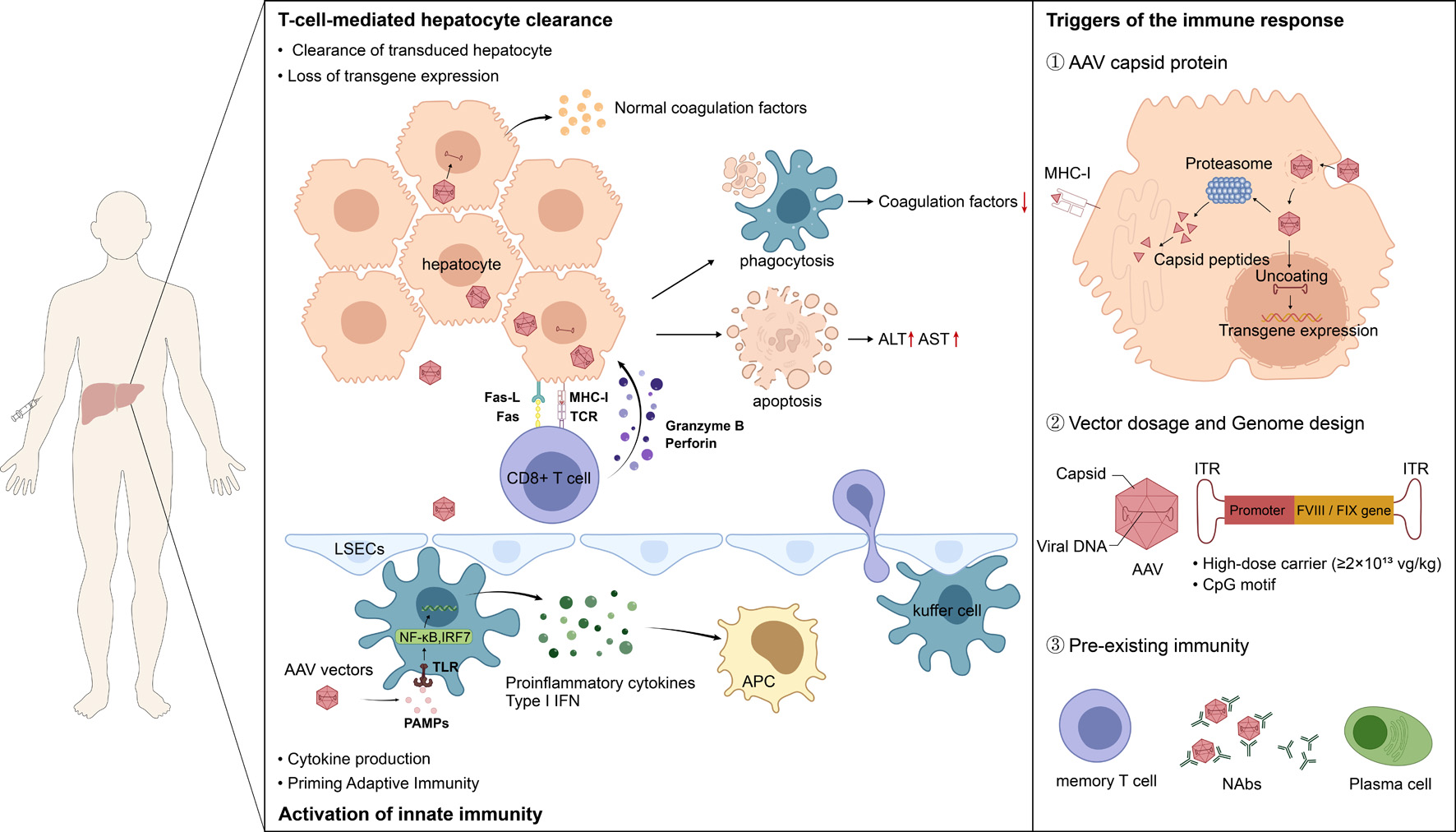
↓ Figure 1. AAV vectors-triggered immunological
liver injury and transgene loss. Hepatocyte injury mediated by CD8+ cytotoxic T lymphocytes
(CTLs) constitutes the central mechanism underlying hepatotoxicity and the loss of coagulation factor
expression. Activated AAV capsid-specific CTLs migrate to the liver, where they recognize and attack
transduced hepatocytes presenting the corresponding peptide–MHC-I complexes. The attack
mechanisms include the release of perforin and granzymes to directly induce hepatocyte apoptosis, as
well as Fas/FasL pathway-mediated cell death. This specific killing leads to the elimination of
hepatocytes containing the transgene genome, thereby resulting in elevated liver transaminases and
decreased coagulation factor expression levels. Furthermore, the innate immune response is the earliest
defensive reaction triggered upon exposure to AAV vectors. When AAV vectors are administered
intravenously, pathogen-associated molecular patterns (PAMPs) such as viral capsid proteins and
unmethylated CpG oligodeoxynucleotides within the vector genome are recognized by Toll-like receptors on
the surface of hepatocytes, liver sinusoidal endothelial cells, and resident immune cells in the liver,
such as Kupffer cells. This recognition activates downstream signaling pathways, leading to the
activation of nuclear factor kappa B (NF-κB) and interferon regulatory factors (IRFs), which in
turn promotes the release of type I interferons (IFN-α/β) and various inflammatory
cytokines, such as IL-6 and TNF-α. Additionally, AAV capsid proteins, vector dosage and genome
design, and pre-existing immunity are all important triggers of immune responses.