Journal of Hematology, ISSN 1927-1212 print, 1927-1220 online, Open Access
Article copyright, the authors; Journal compilation copyright, J Hematol and Elmer Press Inc
Journal website https://jh.elmerpub.com

Original Article

Volume 14, Number 6, December 2025, pages 297-306


Efficacy and Safety of Orelabrutinib for Previously Treated Marginal Zone Lymphoma

Figures

Figure 1.
Figure 1. Comparison of CR (30.00% vs. 53.3%), PR (50.00% vs. 33.33%), SD (10.00% vs. 6.66%), and PD (10.00% vs. 6.66%) between the orelabrutinib and control groups (P > 0.05). CR: complete response; PD: progressive disease; PR: partial response; SD: stable disease.
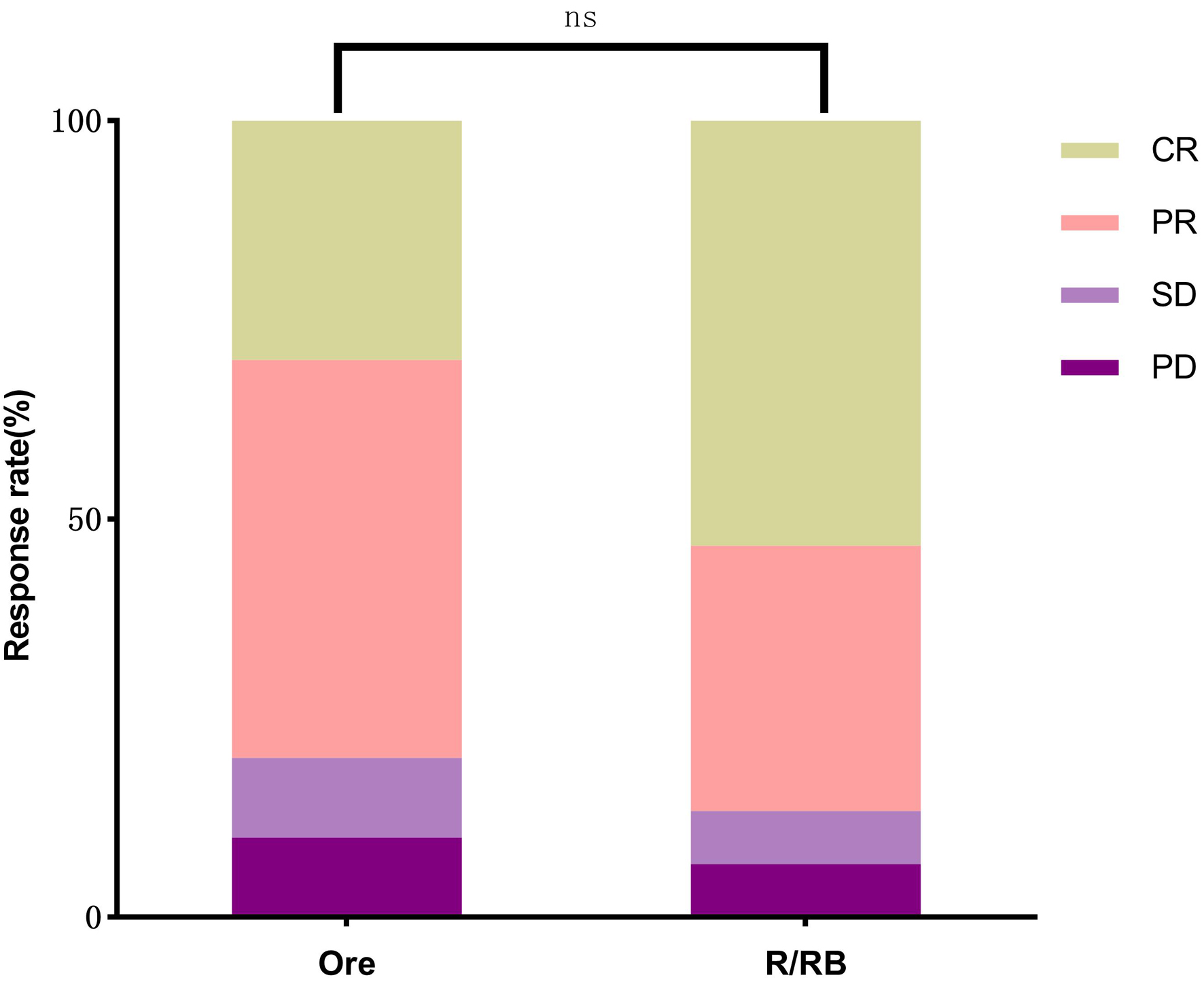
Figure 2.
Figure 2. (a) Overall EFS of the two groups (P = 0.86). (b) EFS of patients after R/R-CT treatment (P = 0.75). Shaded bands denote 95% confidence intervals, and no significant statistical differences were observed in either case. EFS: event-free survival; Ore: orelabrutinib; R/BR: rituximab/bendamustine plus rituximab; R/R-CT: rituximab/rituximab-based chemotherapy.
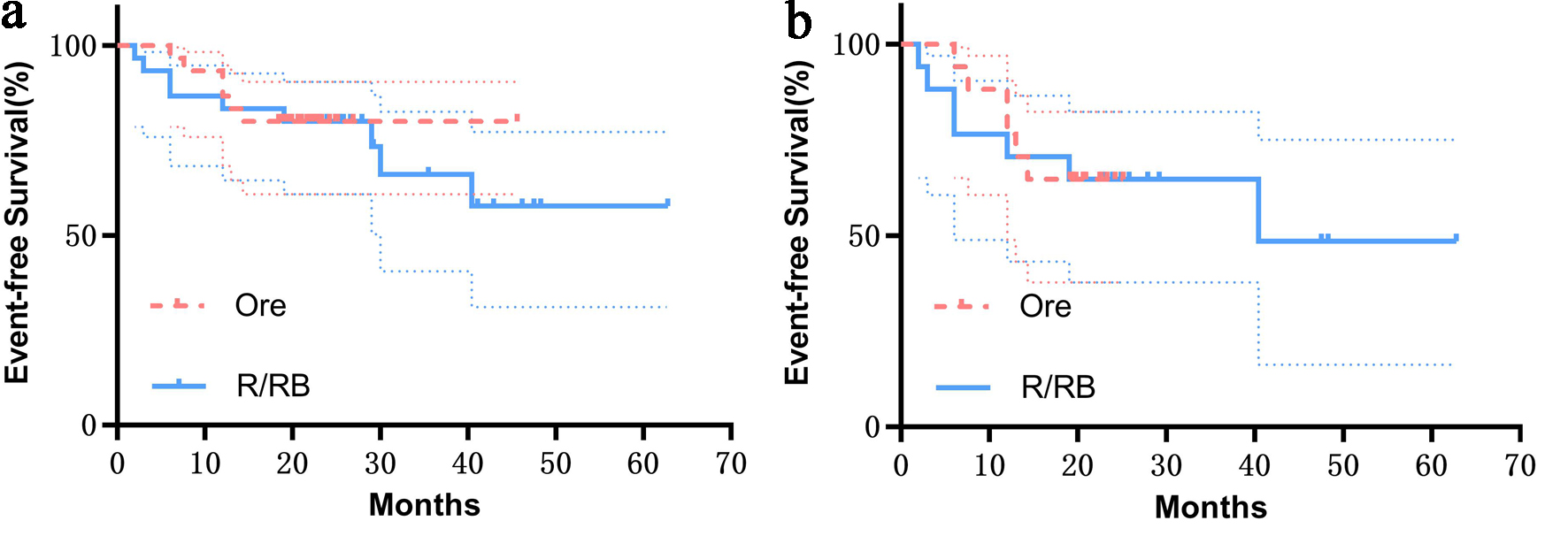
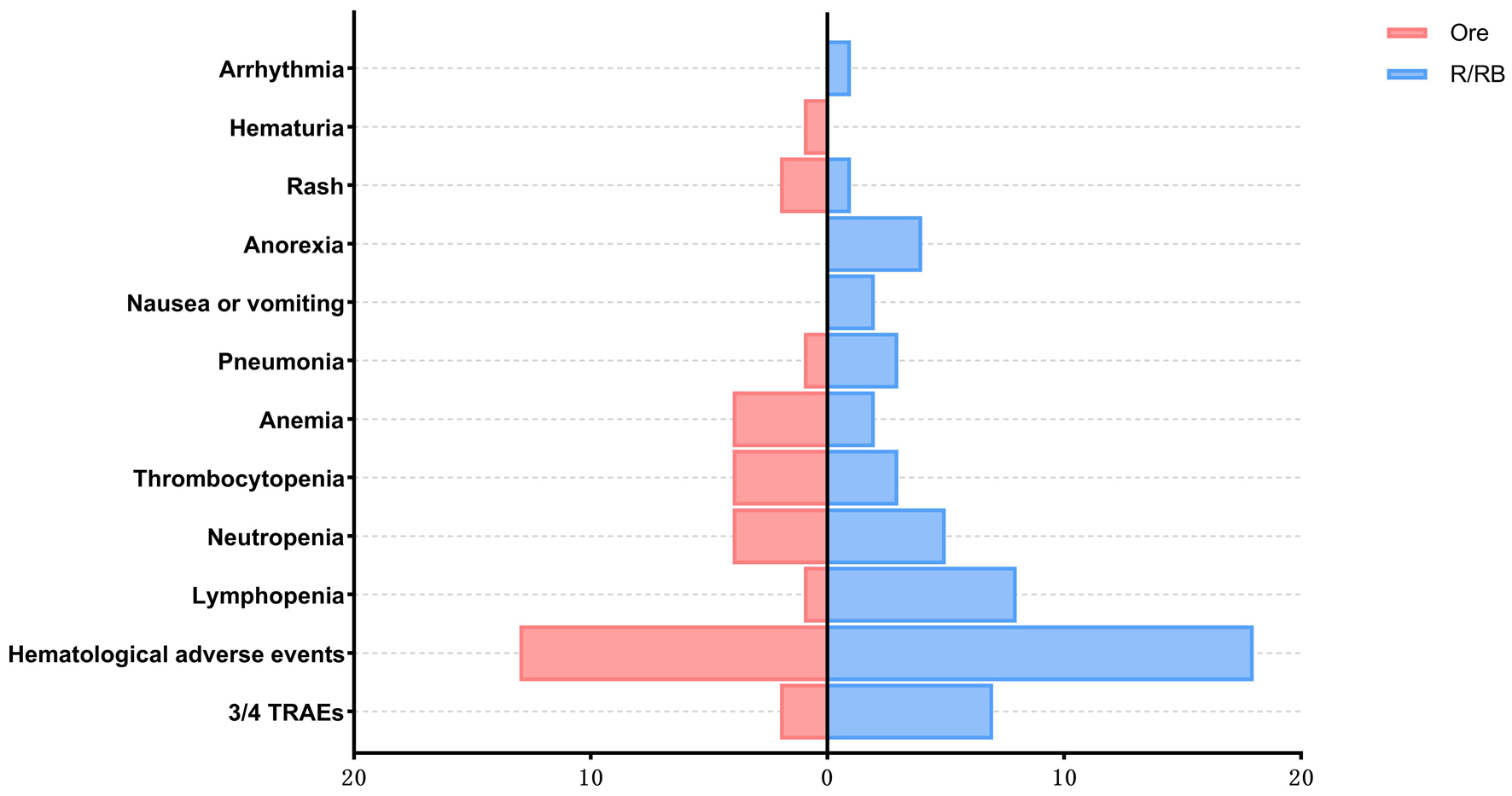
Figure 3.
Figure 3. The numbers of adverse events in the two groups. 3/4 TRAE: grade 3/4 treatment-related adverse event. PSM: propensity score matching; R/BR: rituximab/bendamustine plus rituximab.

Tables

Table 1. Before PSM
 
CharacteristicOrelabrutinib (N = 30)R/BR (N = 81)P
ECOG: Eastern Cooperative Oncology Group; EMZL: extranodal marginal zone lymphoma of mucosa-associated lymphoid tissue; NMZL: nodal marginal zone lymphoma; PSM: propensity score matching; R/BR: rituximab or rituximab plus bendamustine; R/R-CT: rituximab/rituximab-based chemotherapy; SMZL: splenic marginal zone lymphoma.
Male, n (%)19 (63.33)46 (56.79)0.66
Age (years)0.18
  Mean (standard deviation)61.00 (10.03)57.64 (10.57)
  Median (range)60 (35 - 80)59 (30 - 78)
After R/R-CT, n (%)17 (56.66)25 (30.86)0.01
Subtype diagnosis, n (%)0.69
  EMZL15 (50.00)48 (59.25)
  NMZL9 (30.00)21 (25.92)
  SMZL6 (20.00)12 (14.81)
Stage III/IV, n (%)24 (80.00)57 (70.37)0.34
Prognosis, n (%)0.47
  Low-risk5 (16.66)23 (28.39)
  Middle-risk15 (50.00)36 (44.44)
  High-risk10 (33.33)22 (27.16)
Ki-67, n (%)0.22
  < 15%4 (13.33)24 (29.62)
  15% ≤ Ki-67 < 30%19 (63.33)40 (49.38)
  ≥ 30%7 (23.33)17 (20.98)
Bone marrow assessment, n (%)1.00
  Positive7 (23.33)18 (22.22)
ECOG ≥ 3, n (%)5 (16.66)9 (11.11)0.30


Table 2. After PSM
 
CharacteristicOrelabrutinib (N = 30)R/BR (N = 30)PSMD
ECOG: Eastern Cooperative Oncology Group; EMZL: extranodal marginal zone lymphoma of mucosa-associated lymphoid tissue; NMZL: nodal marginal zone lymphoma; PSM: propensity score matching; R/BR: rituximab or rituximab plus bendamustine; R/R-CT: rituximab/rituximab-based chemotherapy; SMZL: splenic marginal zone lymphoma; SMD: standardized mean difference.
Male, n (%)19 (63.33)18 (60.00)1.000.06
Age (years)0.730.08
  Mean (standard deviation)61.03 (10.07)60.23 (9.31)
  Median (range)60 (35 - 80)59 (40 - 78)
After R/R-CT, n (%)17 (56.66)17 (56.66)1.00< 0.01
  Relapsed13 (43.33)15 (50.00)
  Refractory4 (13.33)2 (6.66)
Subtype diagnosis, n (%)1.000.06
  EMZL15 (50.00)15 (50.00)
  NMZL9 (30.00)10 (33.33)
  SMZL6 (20.00)5 (16.66)
Stage III/IV, n (%)24 (80.00)25 (83.33)1.000.08
Prognosis, n (%)0.840.12
  Low-risk5 (16.66)7 (26.66)
  Middle-risk15 (50.00)13 (43.33)
  High-risk10 (33.33)10 (30.00)
Ki-67, n (%)0.870.10
  < 15%4 (13.33)5 (16.66)
  15% ≤ Ki-67 < 30%19 (63.33)17 (56.6)
  ≥ 30%7 (23.33)8 (26.66)
Bone marrow assessment, n (%)
  Positive7 (23.33)9 (30.00)0.770.14
ECOG ≥ 3, n (%)5 (16.66)3 (10.00)0.700.10


Table 3. Comparison of DCR, ORR, CR, and PR Between Relapsed/Refractory Patients After R/R-CT in the Two Groups (P > 0.05)
 
Ore (N = 17)BR (N = 17)P
BR: rituximab plus bendamustine; CR: complete response; DCR: disease control rate; EMZL: extranodal marginal zone lymphoma of mucosa-associated lymphoid tissue; NMZL: nodal marginal zone lymphoma; Ore: orelabrutinib; ORR: overall response rate; PR: partial response; R/R-CT: rituximab/rituximab-based chemotherapy; SMZL: splenic marginal zone lymphoma.
DCR, n (%)14 (82.3515 (88.23)1.00
ORR, n (%)11 (64.70)13 (76.47)0.70
CR, n (%)3 (17.64)5 (29.41)0.68
  EMZL2 (11.76)3 (17.64)1.00
  NMZL1 (5.88)2 (11.76)1.00
  SMZL00-
PR, n (%)8 (47.05)8 (47.05)1.00
  EMZL4 (23.52)4 (23.52)1.00
  NMZL3 (17.64)2 (11.76)1.00
  SMZL1 (5.88)2 (11.76)0.48


Table 4. TRAEs of Orelabrutinib Group
 
TRAEsAll gradesGrade ≥ 3
TRAE: treatment-related adverse event.
Hematologic adverse events, n (%)
  Thrombocytopenia8 (26.66%)2 (6.66)
  Neutropenia6 (20.00%)1 (3.33)
  Anemia4 (13.33%)-
  Lymphopenia3 (10.00%)-
Other TRAEs, n (%)
  Respiratory tract infection3 (10.00%)-
  Rash5 (16.66%)-
  Hematuria2 (6.66)-
  Hypertension and arrhythmias--
  Second tumor--